The Attorney General and Solicitor General of India
The Attorney General is the highest law officer of India. The Solicitor General assists him. This topic covers their roles, appointment and key articles.
Daily Current Affairs, GK Tricks, GS Notes, History, Polity & Exam Strategy — for SSC, UPSC, Railway, Banking & all exams.
The Attorney General is the highest law officer of India. The Solicitor General assists him. This topic covers their roles, appointment and key articles.
The UPSC is the central recruiting agency of India. It conducts exams for the All India and central services. It is an independent constitutional body.
The Finance Commission decides how taxes are shared between the Centre and the States. It is a constitutional body formed every five years.
Citizenship in India is covered under Articles 5 to 11 and the Citizenship Act, 1955. India follows single citizenship for the whole country.
Writs are formal orders issued by courts to protect Fundamental Rights. The Supreme Court issues them under Article 32 and High Courts under Article 226.
Centre-State relations cover legislative, administrative and financial powers between the Union and States, mainly under Articles 245 to 300.
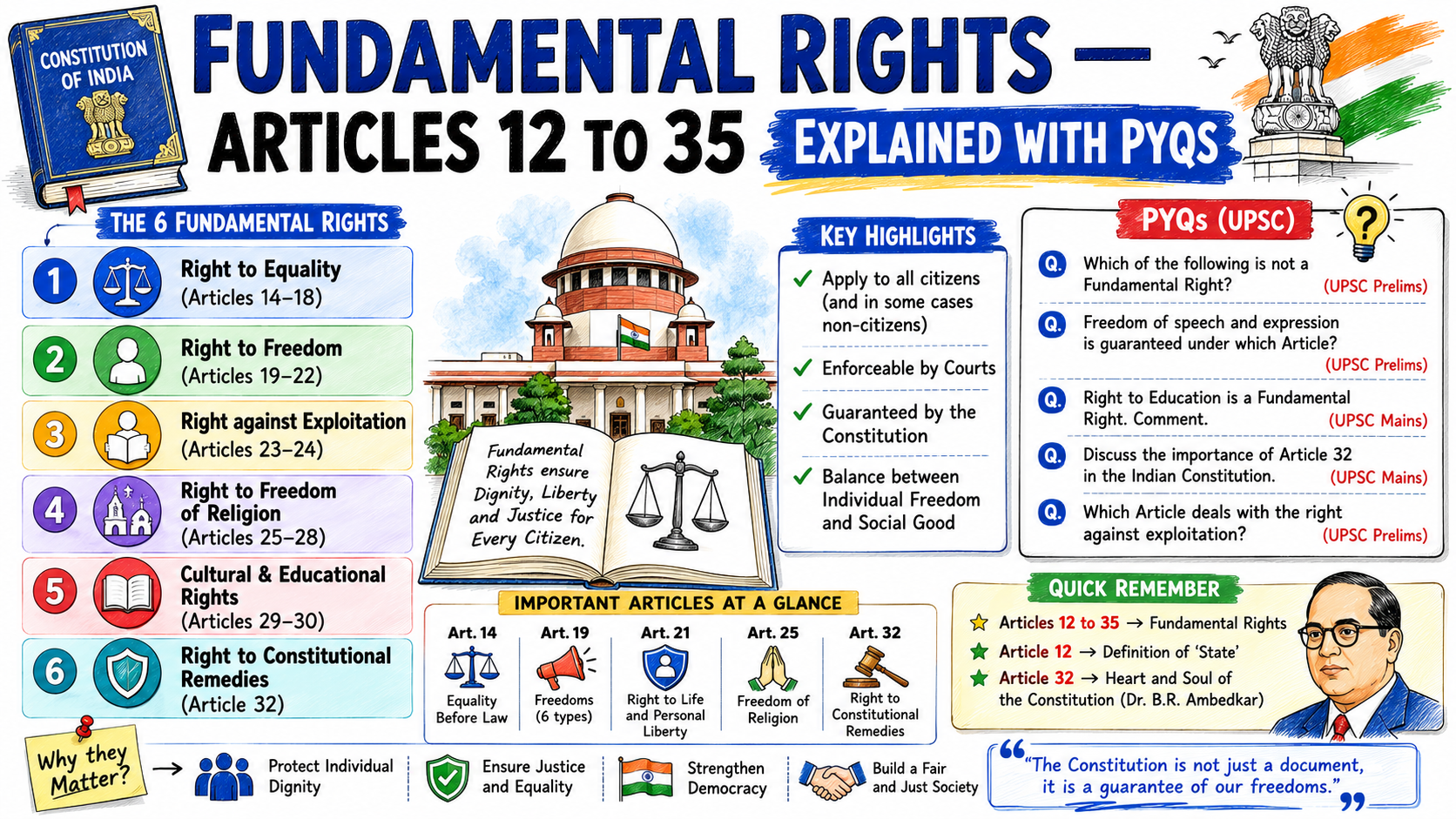
Some articles of the Constitution are asked often in exams. Knowing key articles like 14, 19, 21, 32, 356 and 370 helps in scoring marks.
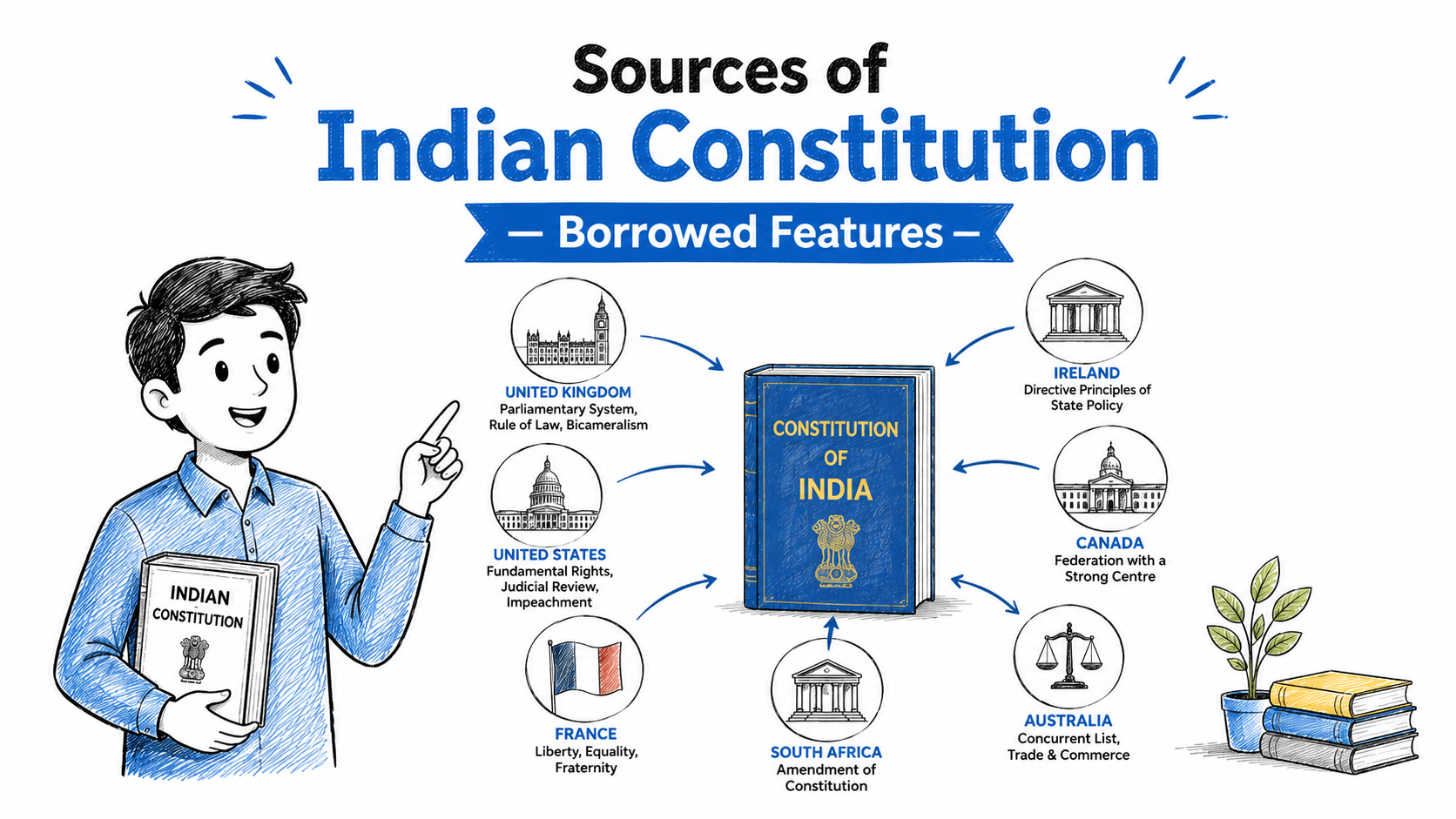
The Indian Constitution was framed by the Constituent Assembly. It took nearly three years and came into force on 26 January 1950.
The Anti-Defection Law was added by the 52nd Amendment in 1985. It is given in the Tenth Schedule and disqualifies members who defect.